Introduction
India is one of the world’s megadiverse countries, hosting an immense variety of insect species that display remarkable colors, patterns, and evolutionary adaptations. These insects are not only aesthetically fascinating but also ecologically indispensable, contributing to pollination, decomposition, biological control, and nutrient cycling.
This article provides a comprehensive scientific overview of the most beautiful insects in India, covering taxonomy, morphology, habitat, Indian distribution, life cycle, behavior, diet, and ecological significance.
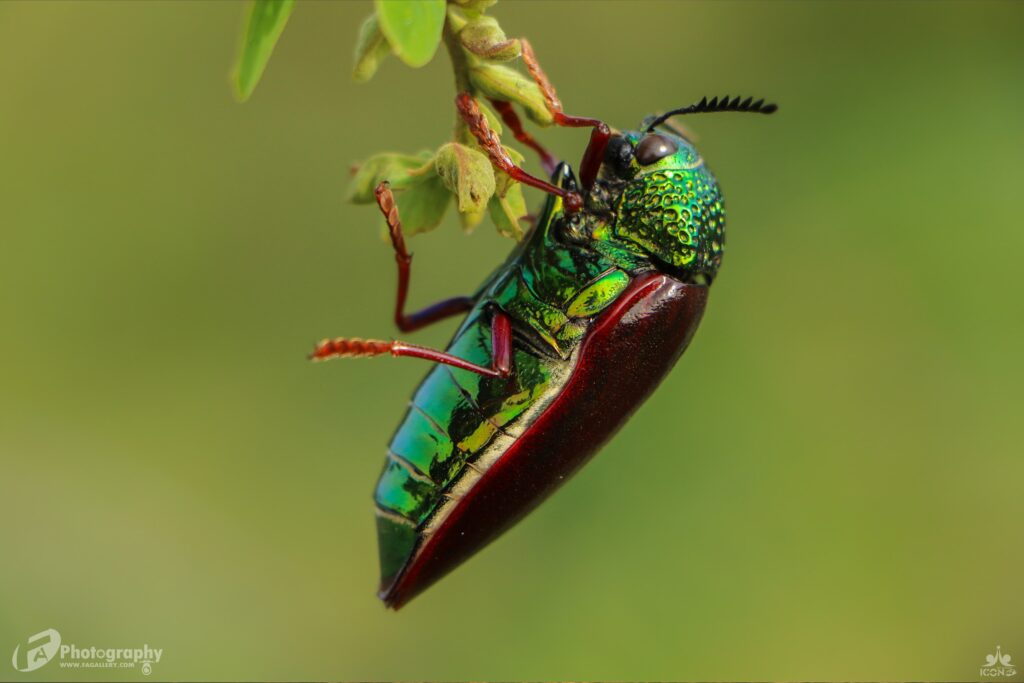
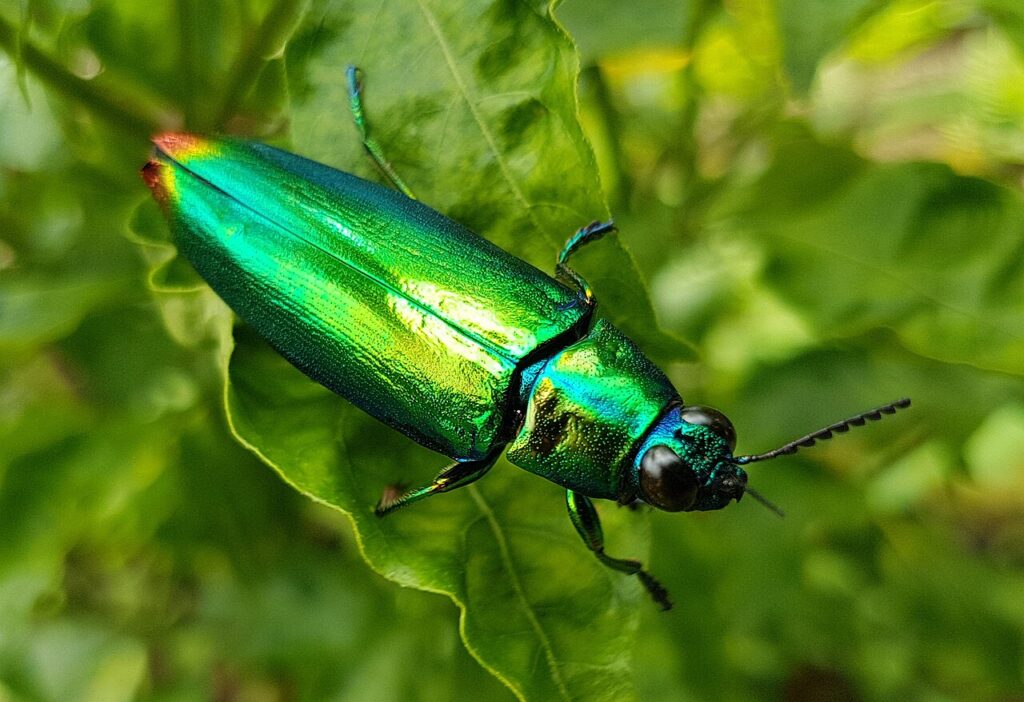
1. Jewel Beetle (Sternocera spp.)
Scientific Classification
- Order: Coleoptera
- Family: Buprestidae
- Genus: Sternocera
Morphology
Jewel beetles are medium to large-sized (20–50 mm), with elongated, rigid bodies. Their metallic coloration is produced by structural interference of light, not pigments, giving them jewel-like brilliance.
Habitat & Indian Distribution
- Central India: Madhya Pradesh, Chhattisgarh
- Western India: Rajasthan, Gujarat
- Southern India: Maharashtra, Karnataka, Tamil Nadu
They inhabit dry deciduous forests, scrublands, and agricultural ecosystems, often associated with Acacia and Neem vegetation.
Life Cycle
Holometabolous development:
- Eggs laid in bark crevices
- Larvae (wood-borers) develop inside tree trunks
- Pupation within galleries
- Adults emerge seasonally
Diet
- Larvae: Xylophagous (wood-feeding)
- Adults: Foliage feeders
Behavior & Ecology
- Diurnal and strong fliers
- Important in wood decomposition and nutrient recycling
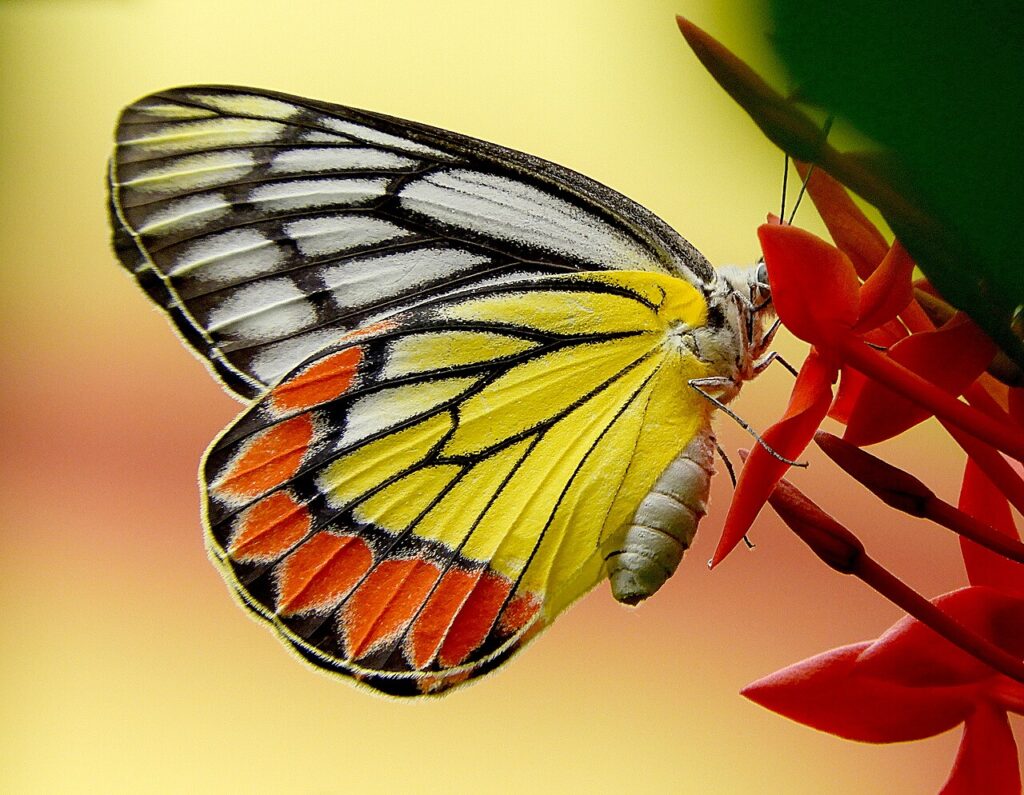
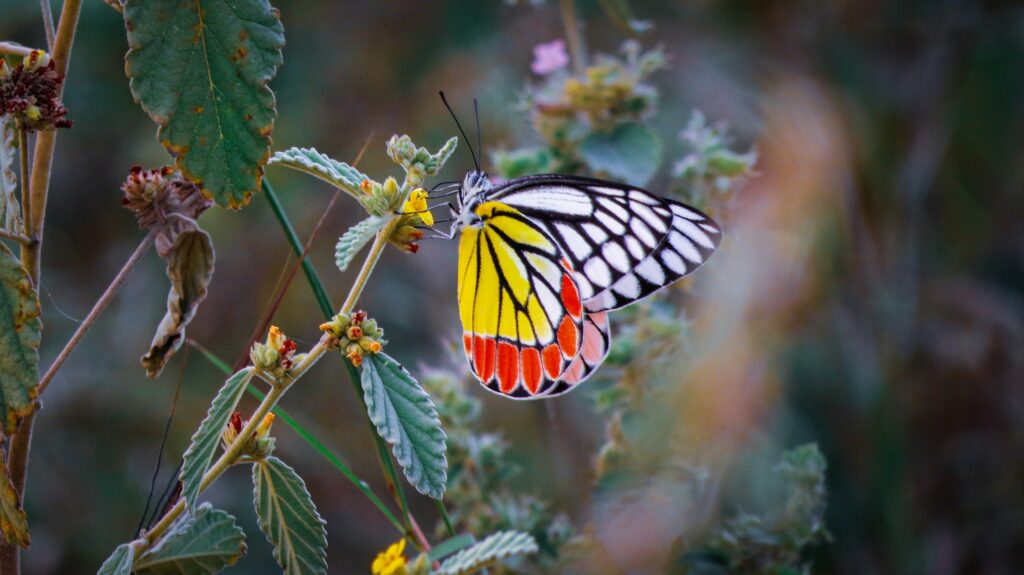
2. Common Jezebel (Delias eucharis)
Scientific Classification
- Order: Lepidoptera
- Family: Pieridae
Morphology
Wingspan of 6–8 cm. Upper surface is white with black venation, while the underside shows bright yellow, red, and black coloration.
Habitat & Distribution in India
- North: Delhi, Uttar Pradesh
- East: West Bengal, Odisha
- South: Kerala, Tamil Nadu
- Northeast: Assam
Occurs in gardens, forests, plantations, and urban landscapes.
Life Cycle
- Eggs laid on Loranthus (mistletoe)
- Gregarious larvae feed on host plant
- Pupa forms a suspended chrysalis
Diet
- Adults: Nectar feeders
- Larvae: Parasitic plants
Behavior & Ecology
- Slow, gliding flight
- Exhibits aposematism (toxicity warning coloration)
- Important pollinator species
3. Picasso Moth (Dysphania militaris)
Scientific Classification
- Order: Lepidoptera
- Family: Geometridae
Morphology
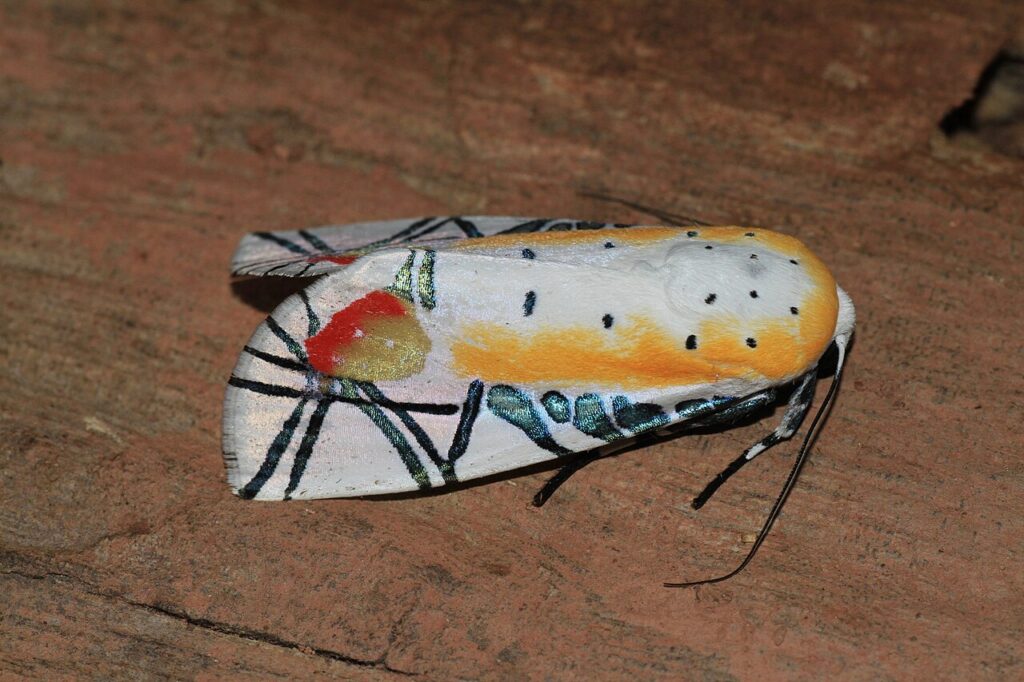
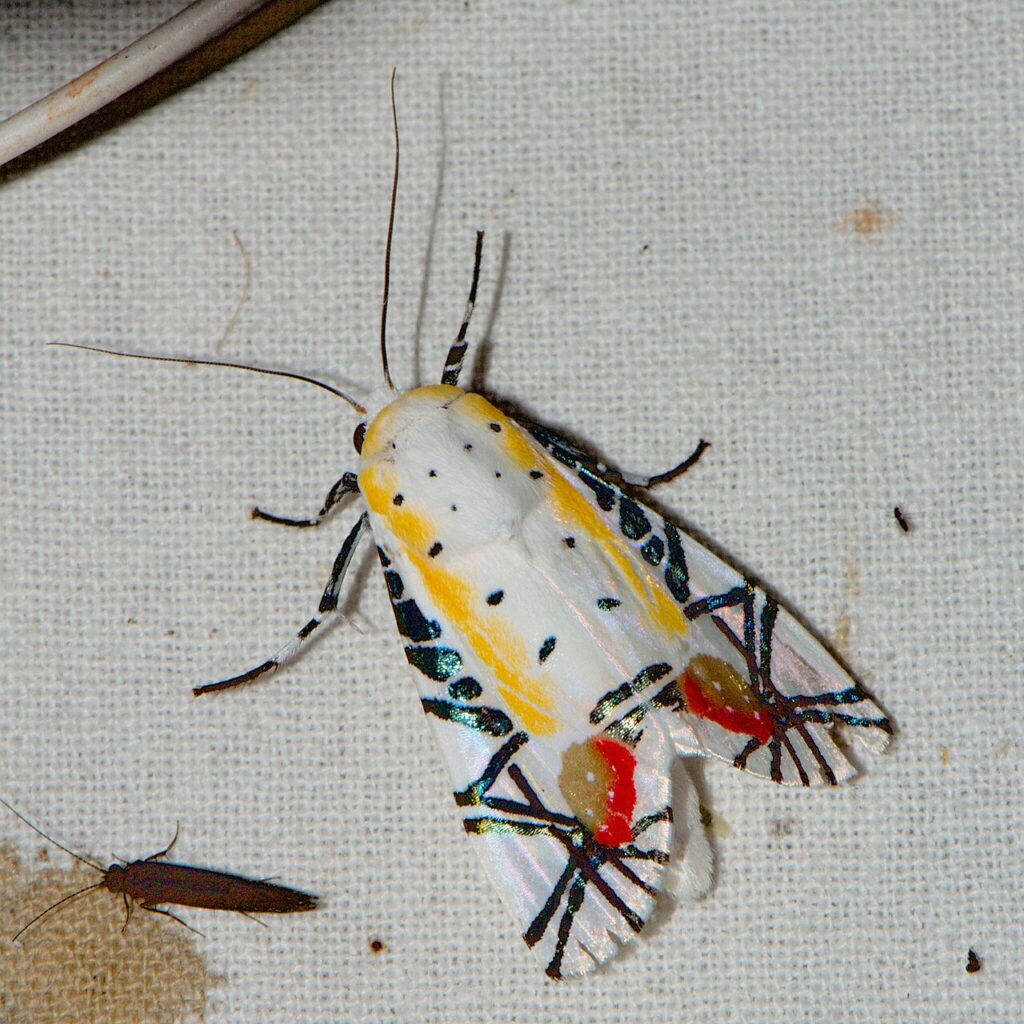
Large moth (7–9 cm wingspan) with vivid green, orange, and black geometric wing patterns.
Habitat & Indian Distribution
- Northeast India: Assam, Meghalaya, Arunachal Pradesh
- Eastern Himalayas: North Bengal (Darjeeling)
Prefers dense evergreen and semi-evergreen forests.
Life Cycle
- Complete metamorphosis
- Larvae are folivorous
- Pupation occurs in leaf litter or soil
Behavior & Ecology
- Diurnal activity (unusual for moths)
- Bright coloration acts as predator deterrence
- Part of forest trophic systems
4. Common Picture Wing Dragonfly (Rhyothemis variegata)
Scientific Classification
- Order: Odonata
- Family: Libellulidae
Morphology
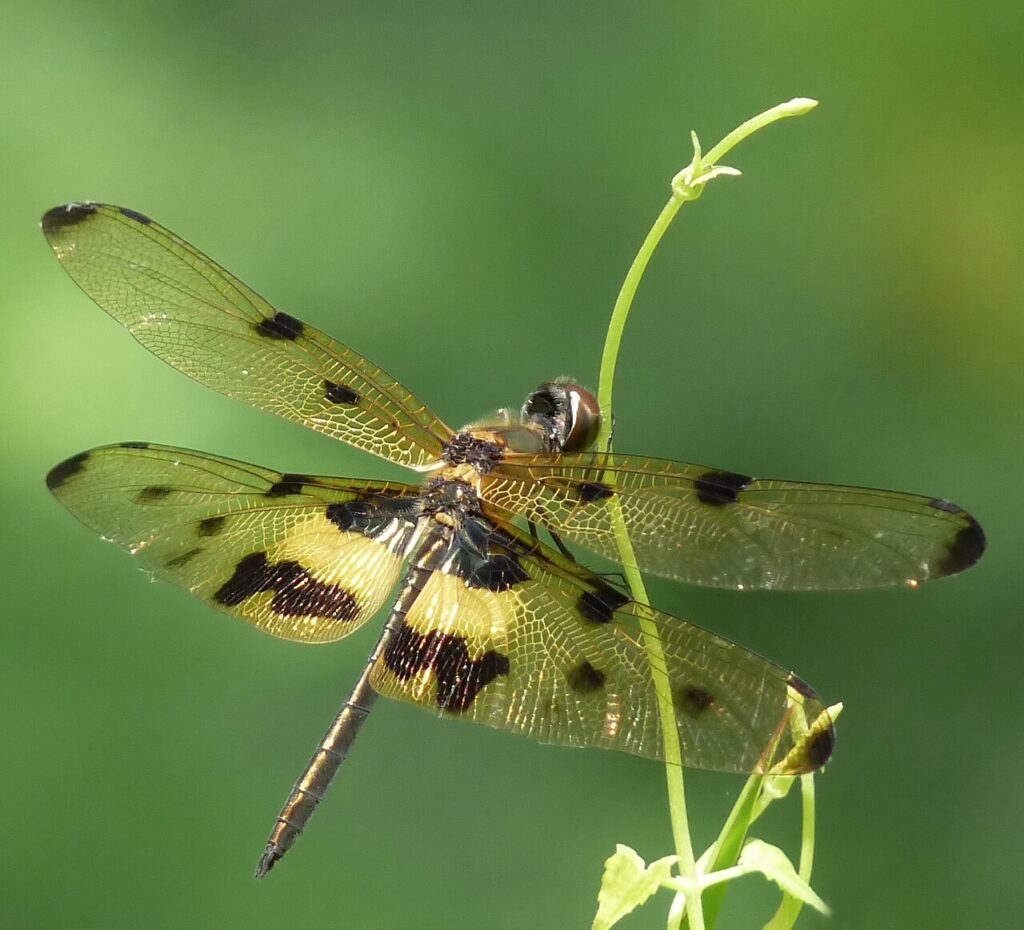
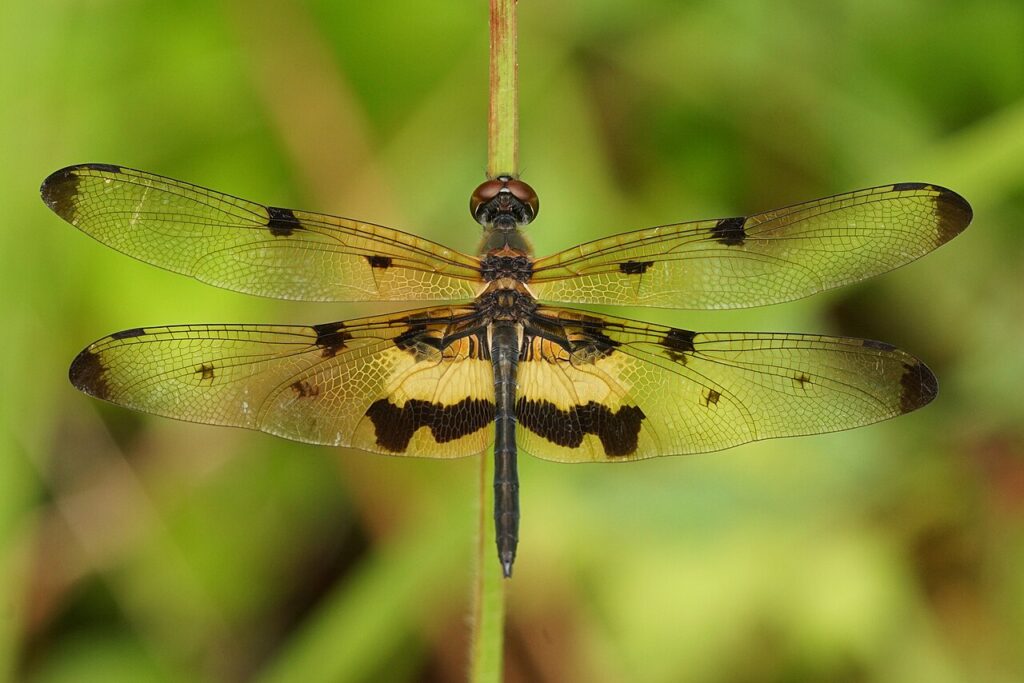
Small dragonfly (~3–4 cm) with broad wings marked by dark patches, creating a patterned appearance.
Habitat & Indian Distribution
- Widely distributed across India
- Found in ponds, lakes, marshes, and rice fields
Life Cycle (Hemimetabolous)
- Eggs deposited in water
- Aquatic nymph stage (predatory)
- Emergence as winged adult
Diet
- Nymph: Aquatic microfauna
- Adult: Flying insects (mosquitoes, flies)
Behavior & Ecology
- Fluttering, butterfly-like flight
- Key biological control agent of mosquitoes
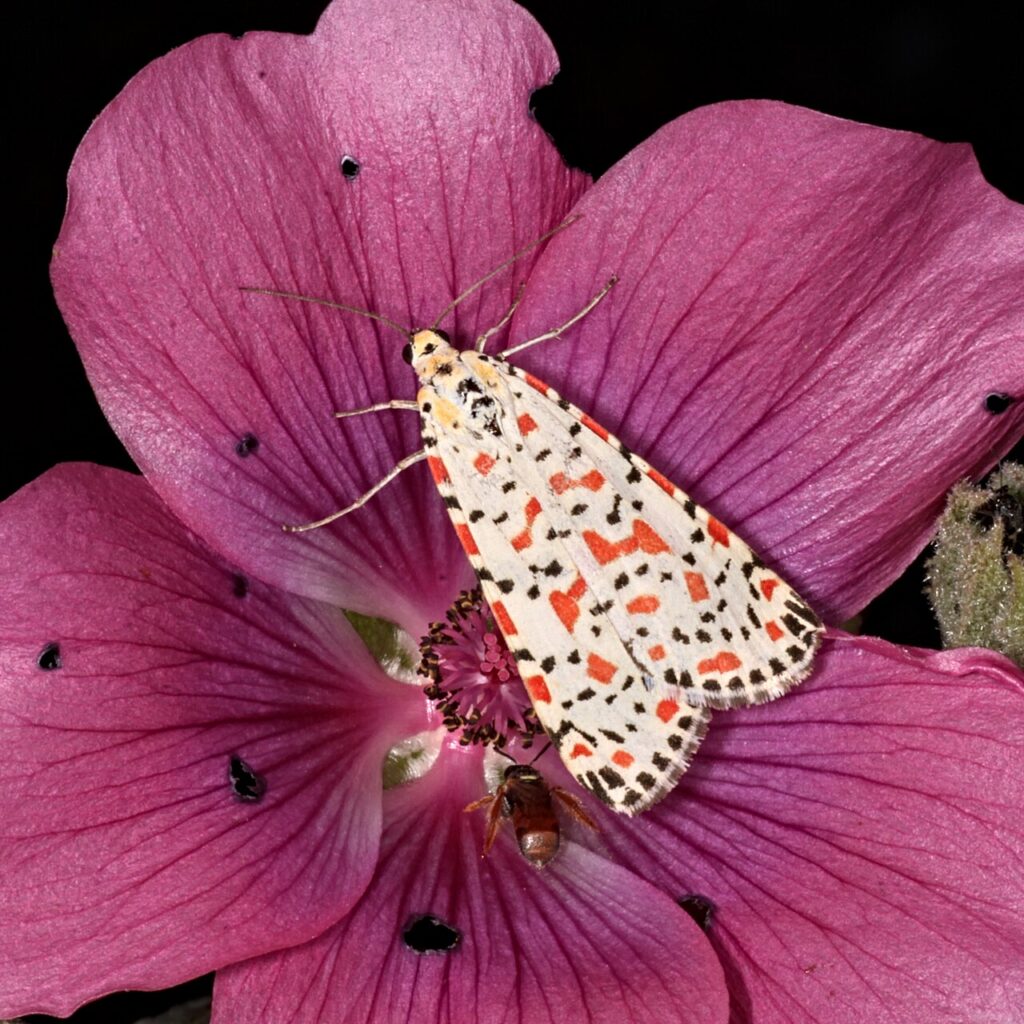
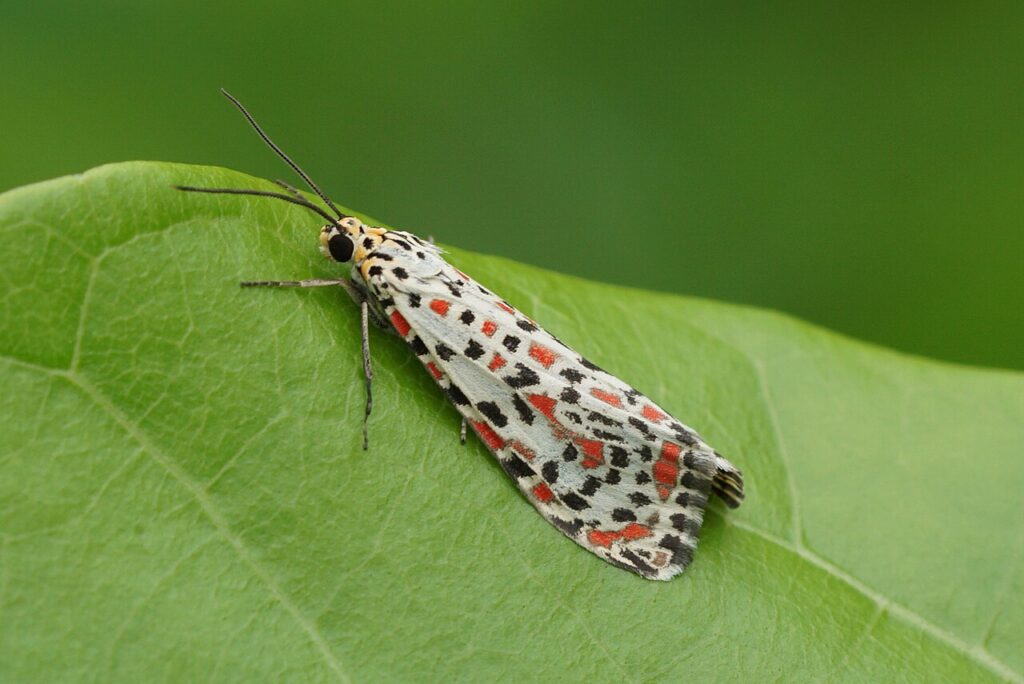
5. Crimson Speckled Moth (Utetheisa pulchella)
Scientific Classification
- Order: Lepidoptera
- Family: Erebidae
Morphology
Small moth (3–5 cm wingspan) with white wings dotted with crimson and black spots.
Habitat & Indian Distribution
- Western India: Rajasthan, Gujarat
- Coastal regions: Maharashtra, Tamil Nadu
- Deccan Plateau
Thrives in dry grasslands, scrublands, and semi-arid ecosystems.
Life Cycle
- Larvae feed on alkaloid-rich plants
- Toxins retained into adulthood
Behavior & Ecology
- Both diurnal and nocturnal
- Exhibits chemical defense and warning coloration
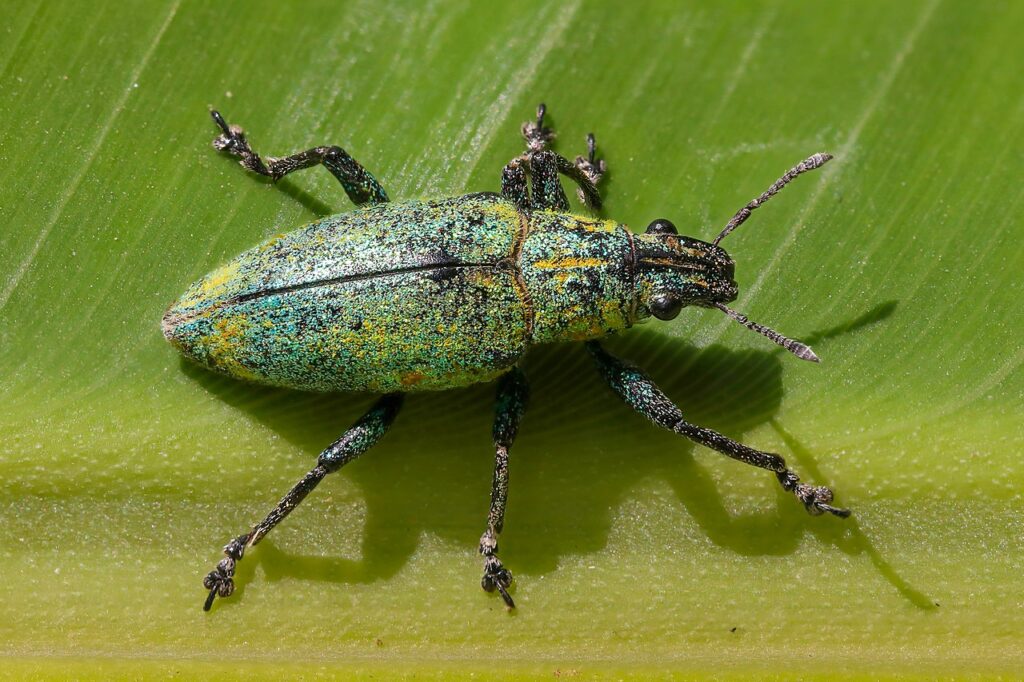
6. Gold Dust Weevil (Hypomeces squamosus)
Scientific Classification
- Order: Coleoptera
- Family: Curculionidae
Morphology
Small beetle (10–15 mm) covered in yellow/golden scales giving a dusty appearance.
Habitat & Indian Distribution
- North: Uttar Pradesh, Punjab
- West: Gujarat, Maharashtra
- South: Karnataka, Tamil Nadu
Common in agricultural fields, orchards, and gardens.
Life Cycle
- Eggs laid in soil
- Larvae feed on roots
- Adults feed on leaves
Diet
Herbivorous (crop plants)
Ecological Role
- Agricultural pest
- Influences crop productivity
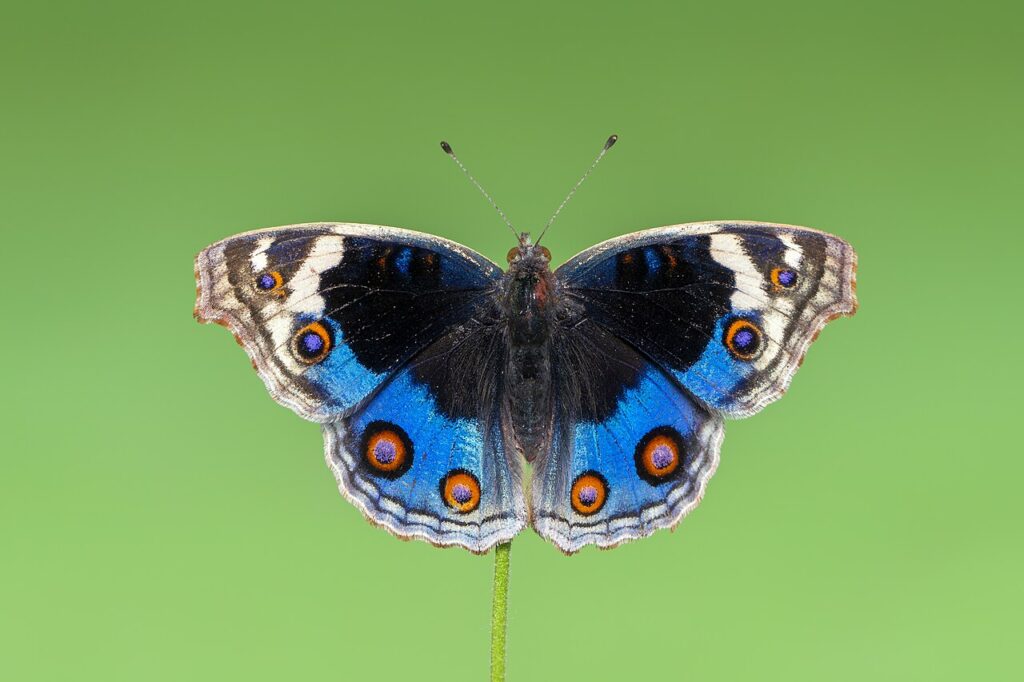
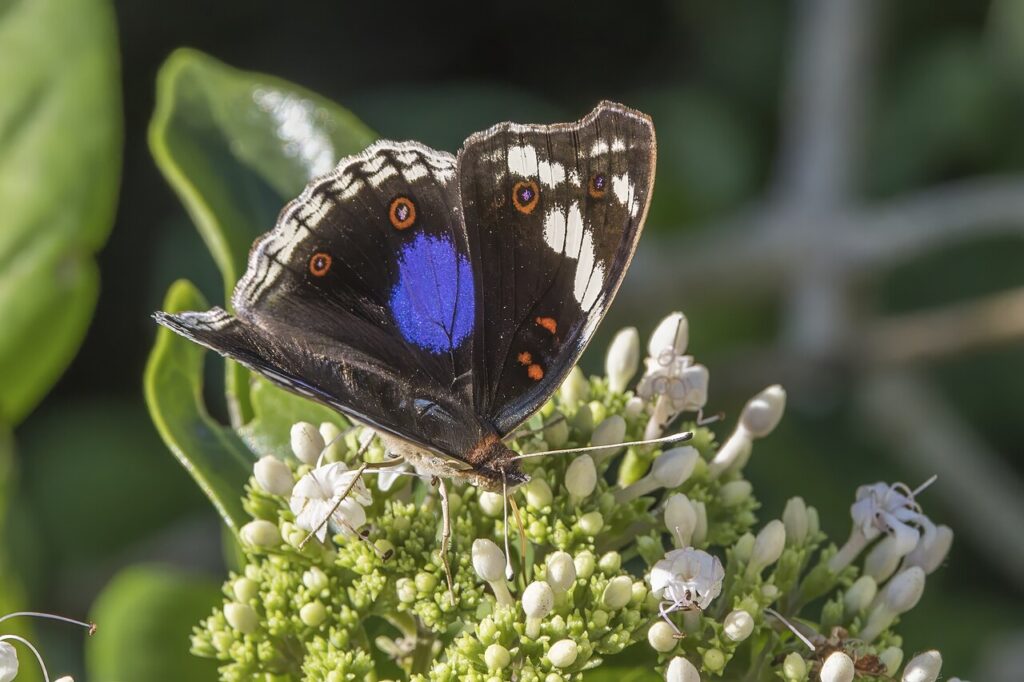
7.Blue Peacock Pansy (Junonia almana)
Scientific Classification
- Order: Lepidoptera
- Family: Nymphalidae
Morphology
Wingspan 5–6 cm with large eye spots; exhibits seasonal polyphenism.
Habitat & Indian Distribution
- Found throughout India including West Bengal, Assam, MP, Tamil Nadu
Prefers open sunny habitats such as grasslands and roadsides.
Life Cycle
- Rapid development
- Multiple broods annually
Behavior & Ecology
- Sun basking for thermoregulation
- Eye spots deter predators
- Important pollinator
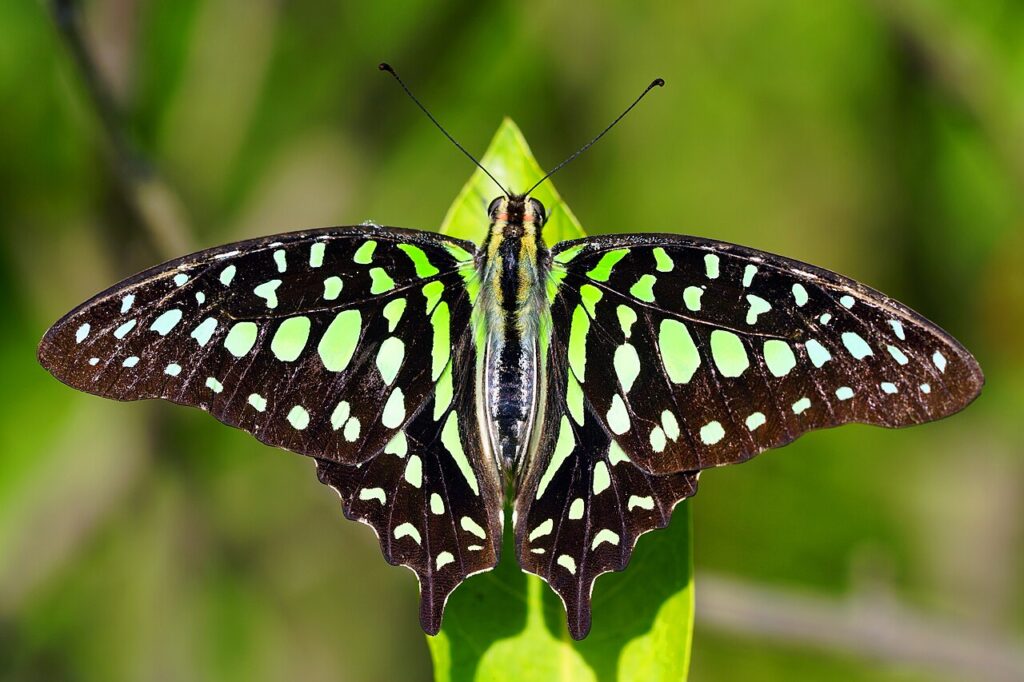
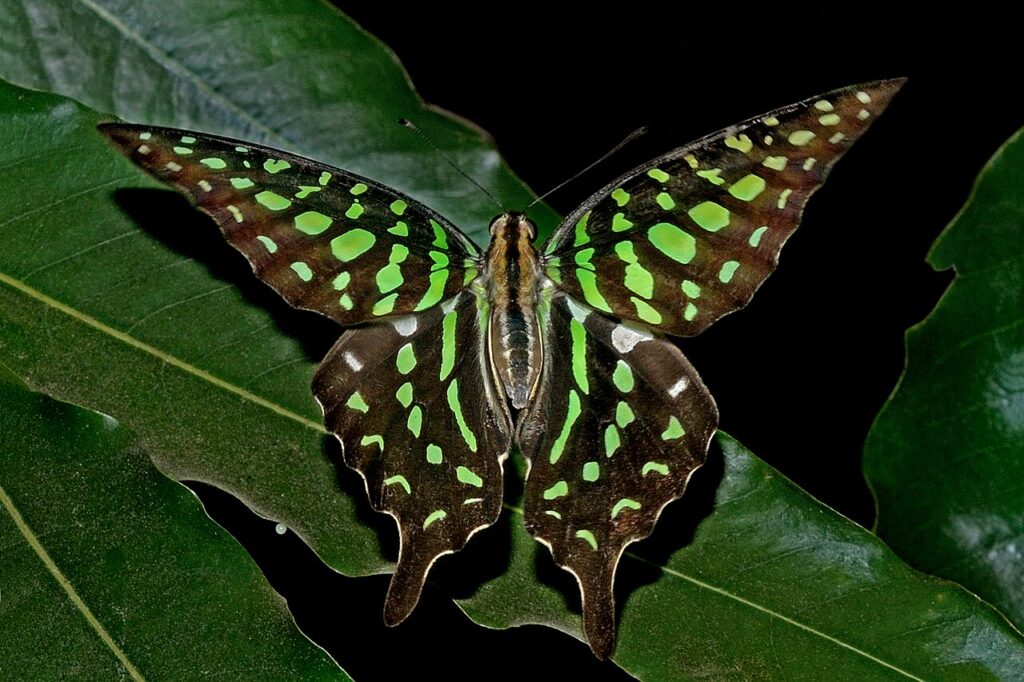
8. Tailed Jay (Graphium agamemnon)
Scientific Classification
- Order: Lepidoptera
- Family: Papilionidae
Morphology
Wingspan 8–10 cm; black wings with bright green spots and short tails.
Habitat & Indian Distribution
- South India: Kerala, Karnataka
- East India: West Bengal
- Northeast India: Assam
Found in forests, plantations, and urban gardens.
Life Cycle
- Host plants: Annonaceae
- Multivoltine (multiple generations/year)
Behavior & Ecology
- Extremely fast and active
- Exhibits mud-puddling behavior
- Effective pollinator
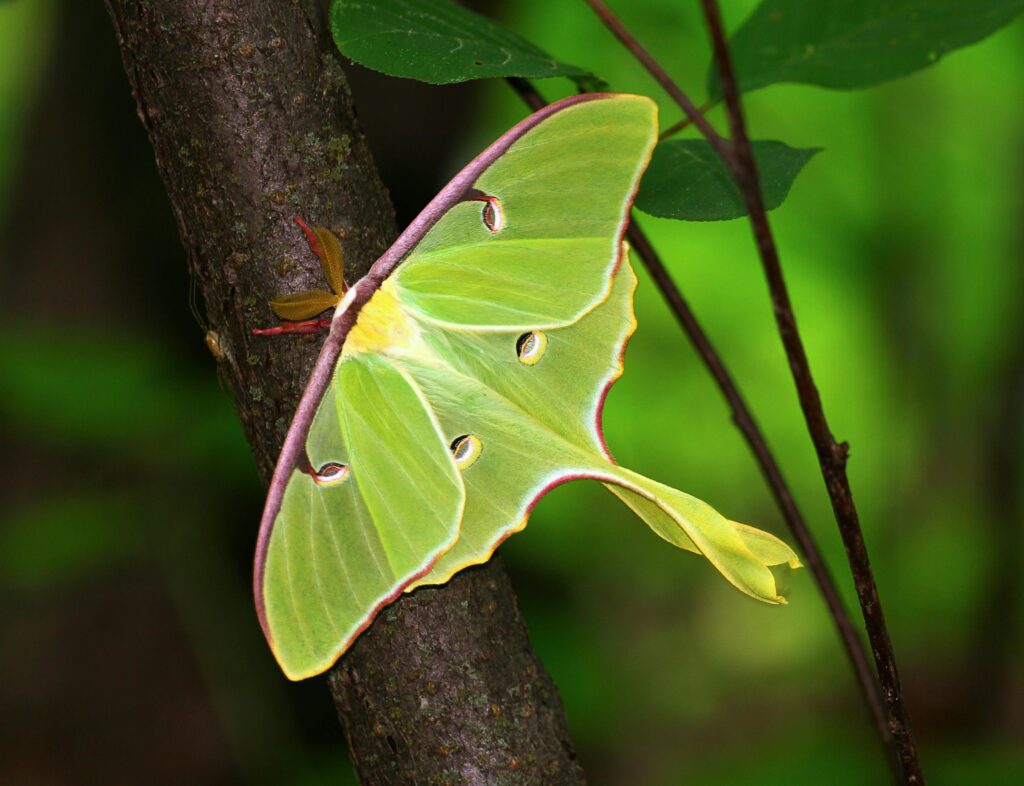
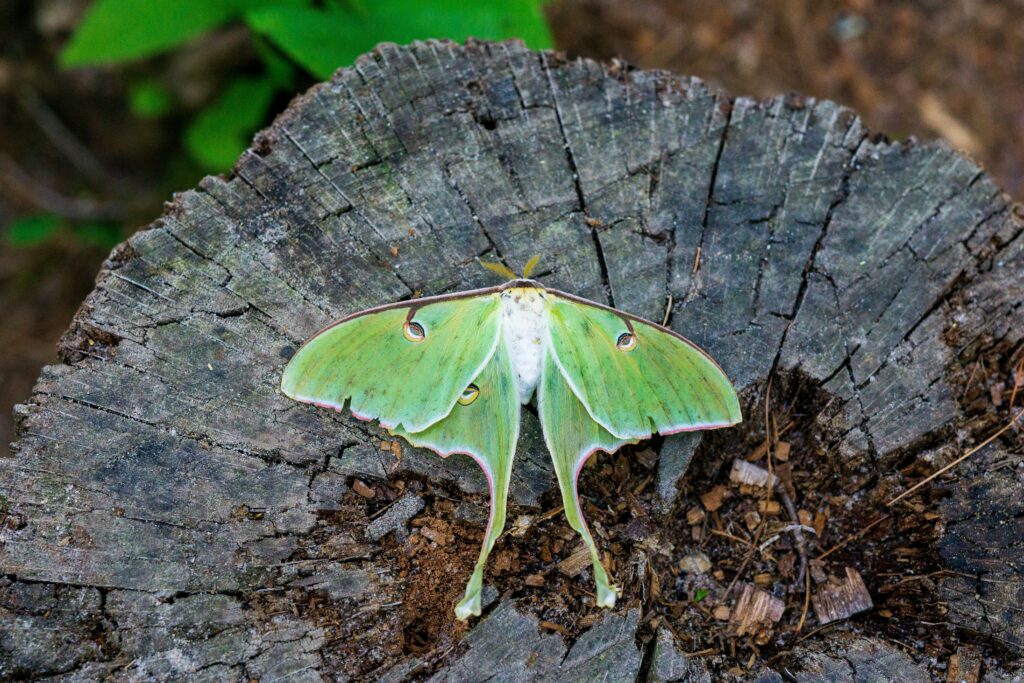
9. Indian Moon Moth (Actias selene)
Scientific Classification
- Order: Lepidoptera
- Family: Saturniidae
Morphology
Large moth (10–15 cm wingspan) with pale green wings and long tail extensions.
Habitat & Indian Distribution
- Himalayan region: Uttarakhand, Himachal Pradesh
- Northeast India: Assam, Arunachal Pradesh
- Eastern India: North Bengal
Inhabits dense, humid forests.
Life Cycle
- Larvae feed on leaves of host trees
- Adults have vestigial mouthparts and do not feed
- Short adult lifespan (few days)
Behavior & Ecology
- Nocturnal and phototactic
- Important prey species in forest food chains
Conclusion
The beauty of these insects is a direct result of evolutionary mechanisms such as structural coloration, mimicry, aposematism, and ecological specialization. Beyond their visual appeal, they are integral to maintaining ecosystem balance, biodiversity stability, and agricultural health in India.
FAQ
Which is the most beautiful insect in India?
Jewel Beetles and Indian Moon Moths are often considered the most beautiful due to their unique coloration and structure.
Where can I find colorful insects in India?
They are commonly found in forests, wetlands, gardens, and agricultural areas, depending on the species.
Why are insects important in ecosystems?
They contribute to pollination, decomposition, pest control, and nutrient cycling, making them essential for ecological balance.
Leave a Reply