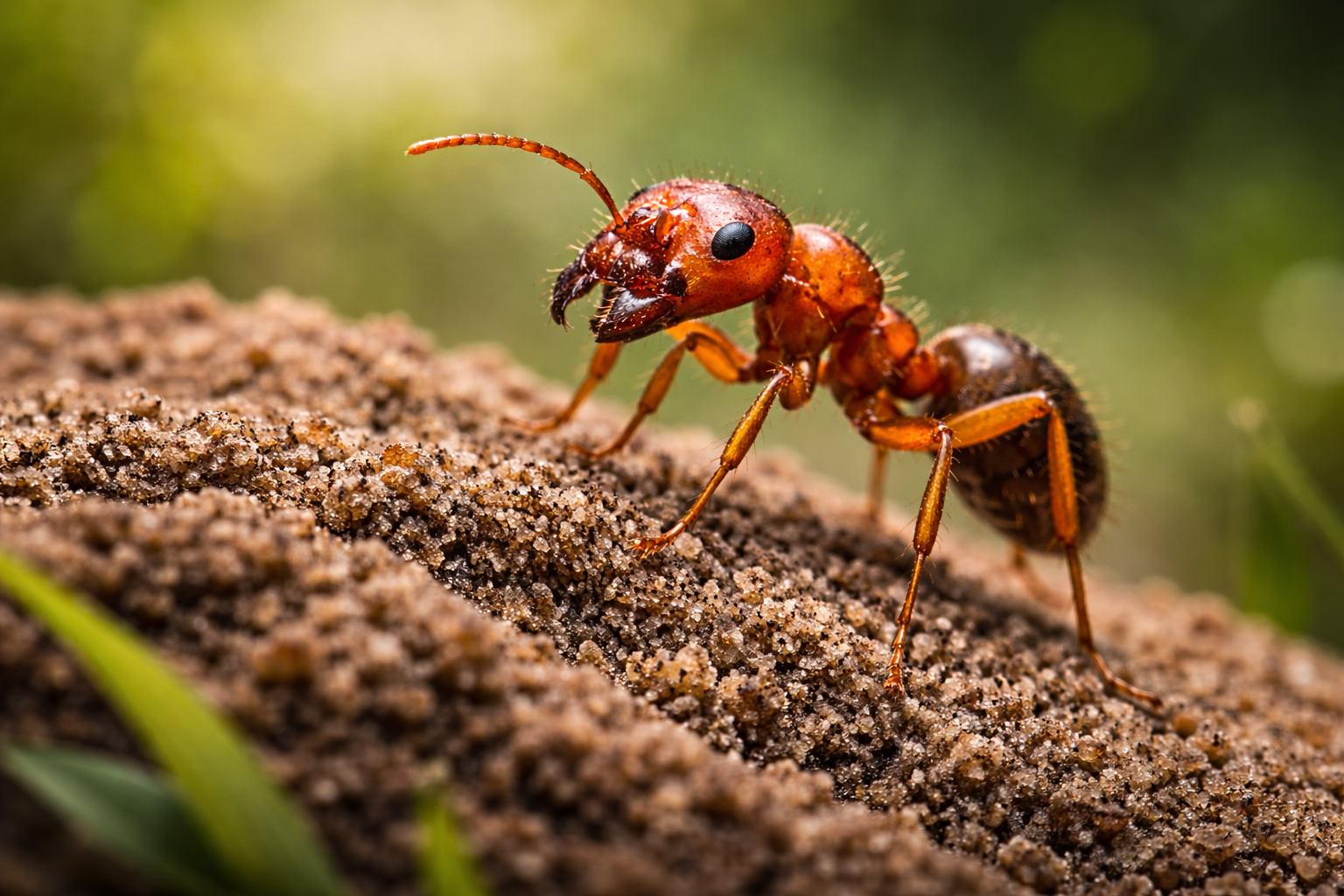
The fire ant (Solenopsis invicta) is one of the most well-known and aggressive ant species in the world. A fire ant is easily recognized by its reddish-brown body, painful sting, and large soil nests. Fire ants live in highly organized colonies and are considered an invasive insect species in many regions. Because of their aggressive behavior and ability to spread quickly, the fire ant has attracted significant attention from scientists and pest control experts.
Fire ants are native to South America but today they are found in many parts of the world. These ants thrive in warm environments where they can build large colonies and expand rapidly. Understanding the fire ant identification, habitat, distribution, diet, and behavior helps researchers and the public recognize this species and understand its ecological impact.
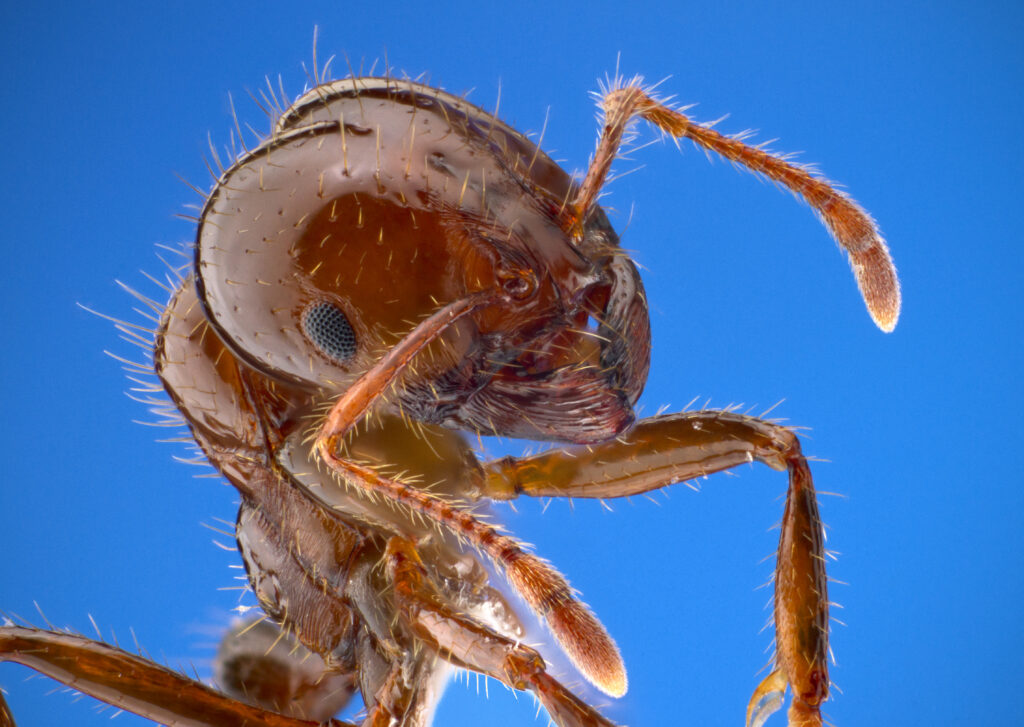
Scientific Classification of the Fire Ant
The fire ant belongs to the insect orderHymenoptera, which also includes bees and wasps.
Scientific classification of the fire ant:
Kingdom: Animalia
Phylum: Arthropoda
Class: Insecta
Order: Hymenoptera
Family: Formicidae
Genus: Solenopsis
Species: Solenopsis invicta
The name Solenopsis invicta means “invincible ant”, which reflects the strong survival ability of this species.
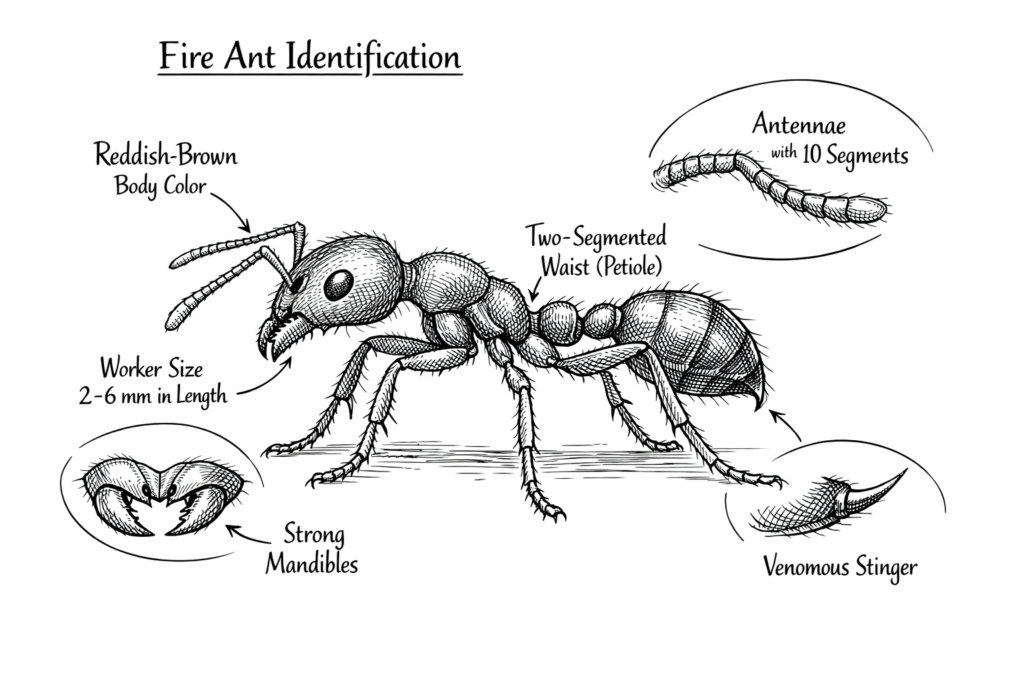
Fire Ant Identification
Proper fire ant identification is important because many red ants look similar. Fire ants have several distinctive characteristics that help identify them.
Physical features of a fire ant include:
- Reddish-brown body color
- Worker ants measuring 2–6 mm in length
- Antennae with 10 segments
- A two-segmented waist (petiole)
- Strong mandibles used for gripping prey
- A venomous stinger used for defense
Fire ants are polymorphic, which means workers within the same colony may vary in size. Some workers are small while others are larger, but they all perform different tasks within the colony.
Fire ants are extremely defensive. When their nest is disturbed, hundreds of workers quickly swarm the intruder.
Fire Ant Habitat
The fire ant habitat usually includes warm and sunny environments with loose soil. Fire ants prefer areas where they can easily dig tunnels and construct their nests.
Common fire ant habitats include:
- Grasslands
- Agricultural fields
- Forest edges
- Gardens and lawns
- Roadsides
- Parks and playgrounds
Fire ants build large mound-shaped nests that may reach up to 40 cm in height. These nests contain a complex system of underground tunnels and chambers where the colony lives.
Unlike some other ant species, fire ants do not always build visible mounds. In humid environments they may nest under rocks, logs, or inside structures.
The fire ant habitat is strongly influenced by climate. These ants thrive in warm tropical and subtropical regions where temperatures remain relatively high throughout the year.
Fire Ant Distribution: Where Fire Ants Are Found
The fire ant distribution has expanded significantly over the past century. Originally native to South America, fire ants have spread to many other regions through human trade and transportation.
Fire ants are most commonly found in:
South America
United States (especially southern states)
Mexico
China
Taiwan
Australia
Parts of Southeast Asia
In the United States, fire ants are especially common in:
- Texas
- Florida
- Alabama
- Georgia
- Mississippi
- Louisiana
These regions provide the warm climate and open landscapes that fire ants prefer.
Fire ants are considered an invasive species in many countries because they compete with native insects and disrupt local ecosystems.
Fire Ant Colony Structure
A fire ant colony is a complex social system made up of several types of ants. Each type has a specific role within the colony.
Members of a fire ant colony include:
Queen
Worker ants
Male ants
Larvae and pupae
The queen fire ant is responsible for laying eggs. A single queen can produce over 1,000 eggs per day, allowing the colony to grow quickly.
Worker ants perform most of the tasks in the colony. These tasks include:
- Gathering food
- Protecting the nest
- Feeding larvae
- Maintaining tunnels
Some fire ant colonies contain multiple queens, which allows the colony to grow even faster.
Fire Ant Behavior
The fire ant behavior is one of the most distinctive aspects of this species. Fire ants are extremely aggressive and react quickly when their nest is disturbed.
Important fire ant behaviors include:
Aggressive colony defense
Cooperative food gathering
Rapid colony expansion
Chemical communication
Fire ants communicate using pheromones, which are chemical signals that allow ants to coordinate their activities. When a worker ant finds food, it releases pheromones that guide other ants to the food source.
Fire ants also display remarkable survival abilities. During floods, fire ants can link their bodies together to form floating rafts, allowing the colony to survive and relocate.
Fire Ant Diet
The fire ant diet is highly varied because these ants are omnivores. This means they eat both plant and animal materials.
Common foods eaten by fire ants include:
Small insects
Caterpillars
Seeds
Plant nectar
Dead animals
Sweet liquids
Fire ants are also known to protect aphids and other sap-feeding insects because these insects produce honeydew, a sugary substance that ants consume.
This flexible fire ant diet allows colonies to survive in many environments.
Fire Ant Sting
The fire ant sting is one of the main reasons these ants are feared by humans. When threatened, fire ants attack quickly and sting repeatedly.
A fire ant first grips the skin with its jaws and then injects venom using its stinger.
Symptoms of a fire ant sting include:
Burning sensation
Red bumps
Small white pustules
Swelling and itching
For most people, the pain disappears after a few hours. However, some individuals may experience allergic reactions, which require medical treatment.
Because fire ants attack in groups, a person may receive multiple stings at once if they accidentally step on a fire ant nest.
Life Cycle of the Fire Ant
The fire ant life cycle follows the typical development of ants and other insects.
The stages include:
Egg
Larva
Pupa
Adult
The queen lays eggs, which hatch into larvae within a few days. Worker ants feed and care for the larvae until they develop into pupae. Eventually, the pupae transform into adult ants.
A fire ant colony can expand rapidly because the queen produces a large number of eggs.
Importance of Fire Ants in Ecosystems
Although fire ants can be pests, they also play roles in ecosystems.
Fire ants help control populations of other insects by acting as predators. They also contribute to soil aeration through their tunneling activity.
However, when fire ants invade new regions, they can reduce populations of native insects and disrupt ecological balance.
Interesting Facts About Fire Ants
Some fascinating facts about fire ants include:
Fire ants can form floating rafts during floods
A single colony may contain over 250,000 workers
Fire ants communicate using chemical signals
The queen can live for several years
Fire ants are among the most successful invasive insects
Conclusion
The fire ant (Solenopsis invicta) is a remarkable insect species known for its aggressive defense, painful sting, and highly organized colonies. Native to South America, the fire ant has spread to many parts of the world where it thrives in warm climates. Fire ants build large nests, form complex social colonies, and consume a wide variety of foods. Understanding the fire ant identification, habitat, distribution, behavior, and life cycle helps scientists and the public better appreciate the biology of this fascinating insect.
Leave a Reply