Physical Appearance
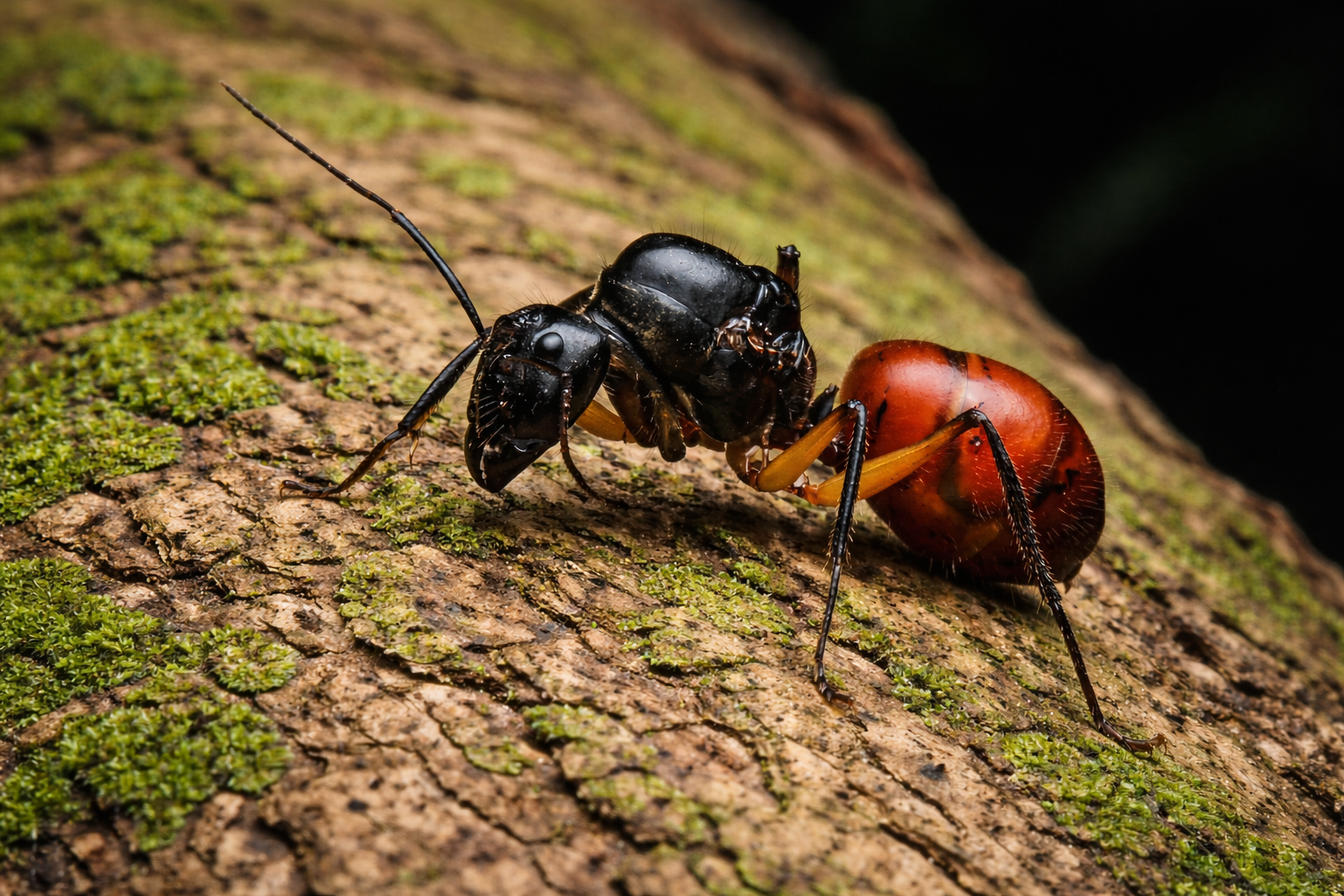
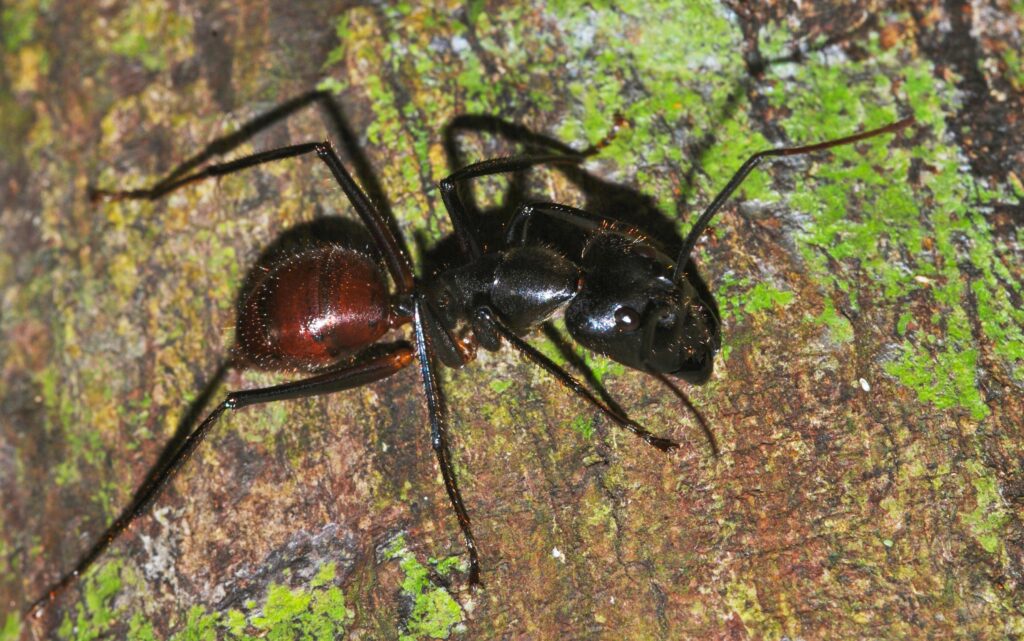
The Giant Forest Ant is easily recognized because of its large body size and strong mandibles.
- Worker length: about 20–28 mm
- Queen length: up to 30 mm
- Color: mostly dark brown to black
- Body structure: large head, powerful jaws, and long legs
Because of their size, they are often mistaken for other large insects when seen in the forest at night.
Where Giant Forest Ants Are Found
The Giant Forest Ant is native to Southeast Asia and mainly lives in humid tropical rainforests. Their distribution includes:
- Malaysia
- Indonesia
- Thailand
- Singapore
- Brunei
- Southern parts of Myanmar
- Some regions of Northeast India
In India, similar large carpenter ants are found in Northeast rainforests such as Assam and Meghalaya, where dense forests provide ideal nesting locations.
These ants prefer habitats with:
- Large trees
- Dead wood
- Thick forest canopy
- High humidity
Habitat and Nesting
Unlike many ants that live underground, Giant Forest Ants usually build nests inside trees or rotting wood. They often create colonies in:
- Tree cavities
- Fallen logs
- Decaying branches
A colony may contain thousands of workers along with a single queen.
Behavior
Giant Forest Ants are mainly nocturnal, meaning they become active at night.
During nighttime they leave their nests to search for food such as:
- Small insects
- Honeydew from aphids
- Nectar
- Dead animals
Workers travel long distances along tree trunks and branches while searching for food.
Defense and Strength
These ants are known for their strong bite. Their large mandibles allow them to defend their colony and capture prey effectively.
When threatened, workers may:
- Bite strongly
- Release defensive chemicals
- Attack in groups
Despite their size, they are generally not aggressive toward humans unless disturbed.
Role in the Ecosystem
Giant Forest Ants play an important role in rainforest ecosystems by:
- Controlling populations of smaller insects
- Helping decompose organic matter
- Contributing to forest nutrient cycles
Their presence is often considered a sign of a healthy forest environment.
Interesting Fact
A colony of Giant Forest Ants can build multiple nests in different trees, creating a network across the forest canopy. This allows them to efficiently search for food over large areas.
Conclusion
The Giant Forest Ant (Camponotus gigas) is one of the most fascinating ants found in tropical rainforests. With its massive size, nocturnal lifestyle, and complex colonies, it stands out as one of the most impressive members of the ant world. These ants thrive in the dense forests of Southeast Asia and parts of Northeast India, where they continue to play an important role in maintaining the balance of forest ecosystems.
Leave a Reply